Position 1
Growth must pay its way
No tax-break (PILOT) housing in Gardiner. New development should pay its full share and fit within our sewer capacity.
What a PILOT is. Under a “payment in lieu of taxes” deal, a property comes off the regular tax roll and pays a negotiated amount instead. PILOT projects do pay something, but usually far less than their full share, while using the same schools, roads, emergency services and sewer as everyone else.
A local example. In 2014–15 the Ulster County IDA approved a 25-year PILOT for the Park Point student housing project in New Paltz, paying roughly 31% of full taxes. New Paltz estimated the school district would receive about $329,000 a year instead of about $1.06 million. The New Paltz Planning Board denied the site plan on fiscal-impact grounds under SEQRA, and the court upheld the denial: “The IDA set the PILOT… Nothing requires that one defer to the other.” Towns have real leverage.
Gardiner’s constraint. The hamlet sewer has repeatedly exceeded 95% of design flow, and the Plan says capacity “needs to be found for any further development” (pp. 45–46). Growth has to fit that reality.
State-subsidized projects. Projects financed with state tax credits, loans and grants (for example by developers such as RUPCO) usually also rely on a PILOT. State funding does not override local review: they still need zoning compliance, Planning Board site-plan approval, SEQRA review and sewer capacity. We found no such project proposed in Gardiner.
What we ask the town to do
- Adopt a fiscal policy declining tax-break (PILOT) housing deals and favoring full-tax projects, and say so at county IDA hearings.
- Keep the Plan’s density limits outside the hamlets.
- Make sewer capacity a condition of approval.
- Apply SEQRA review fully, including fiscal and service impacts.
Pro-Housing certification: decide it openly
The Town Board heard a presentation on New York’s Pro-Housing Community program on March 3, 2026 (Times Hudson Valley). Certification is now required to apply for roughly $750 million in state funds, including a new program for sewer and water capacity tied to housing (NYS HCR). Declining is lawful, but it means giving up access to money that could help fix the hamlet sewer. We ask the Board to lay out those tradeoffs publicly before deciding.
This is a position on a tax tool and on infrastructure, not on who our neighbors are. The 2022 Plan supports a Housing Committee and housing options for seniors and current residents.
Position 2
Preservation fund: a fair deal for residents who move within Gardiner
Gardiner’s Community Preservation Fund is paid for by a 1.25% real estate transfer tax, charged only on the part of a sale price above the exemption, currently $437,000 for closings on or after April 23, 2026. A $537,000 sale owes $1,250. (Town Code Ch. 101; Ulster County Clerk.) The fund is overseen by the Community Preservation Advisory Board.
Proposal: a “replacement primary residence” credit. If you sell your Gardiner primary home and buy another one here, you shouldn’t pay the preservation tax again.
The exemptions are fixed in state law (Tax Law §1564), so this needs state legislation: a Town Board resolution requesting it, a bill from our Assembly member and State Senator, a home-rule message from the town, and the Governor’s signature. Tying the credit to selling and rebuying a primary residence in Gardiner, rather than to how long someone has lived here, is the legally sturdier design.
Position 3
Conservation easements: regular stewardship reviews
Conditions change over decades, and the public deserves to know that protected land is still doing its job. Most existing easements are perpetual by law and can’t be put on a renewal cycle after the fact, and requiring term limits on donated easements would cost donors their federal tax deduction. So we propose:
- A formal stewardship review every 10 years of town-held easements: condition, whether the purpose is still served, and public access.
- A published amendment policy: changes only when they are conservation-neutral or better and give no private benefit.
- Term easements (for example 25, 50 or 75 years with a renewal vote) only for easements the town itself purchases.
- A public report on easement acreage and status as part of the annual Plan report.
Position 4
Naming rights to help maintain our parks
Let a foundation, business or family sponsor a feature for a set term, with the money going to a dedicated parks maintenance reserve. Comparable towns do this: the Town of Sweden, NY offered its skatepark’s naming rights for a 10-year term (RFP).
| Feature | Suggested term |
|---|
| Majestic Park pavilion | 5 years |
| Playground | 5 years |
| Skatepark | 10 years |
| Pump track (opened June 2024) | 5 years |
| GUNKS 18-hole disc golf course | 10 years (individual holes: annual) |
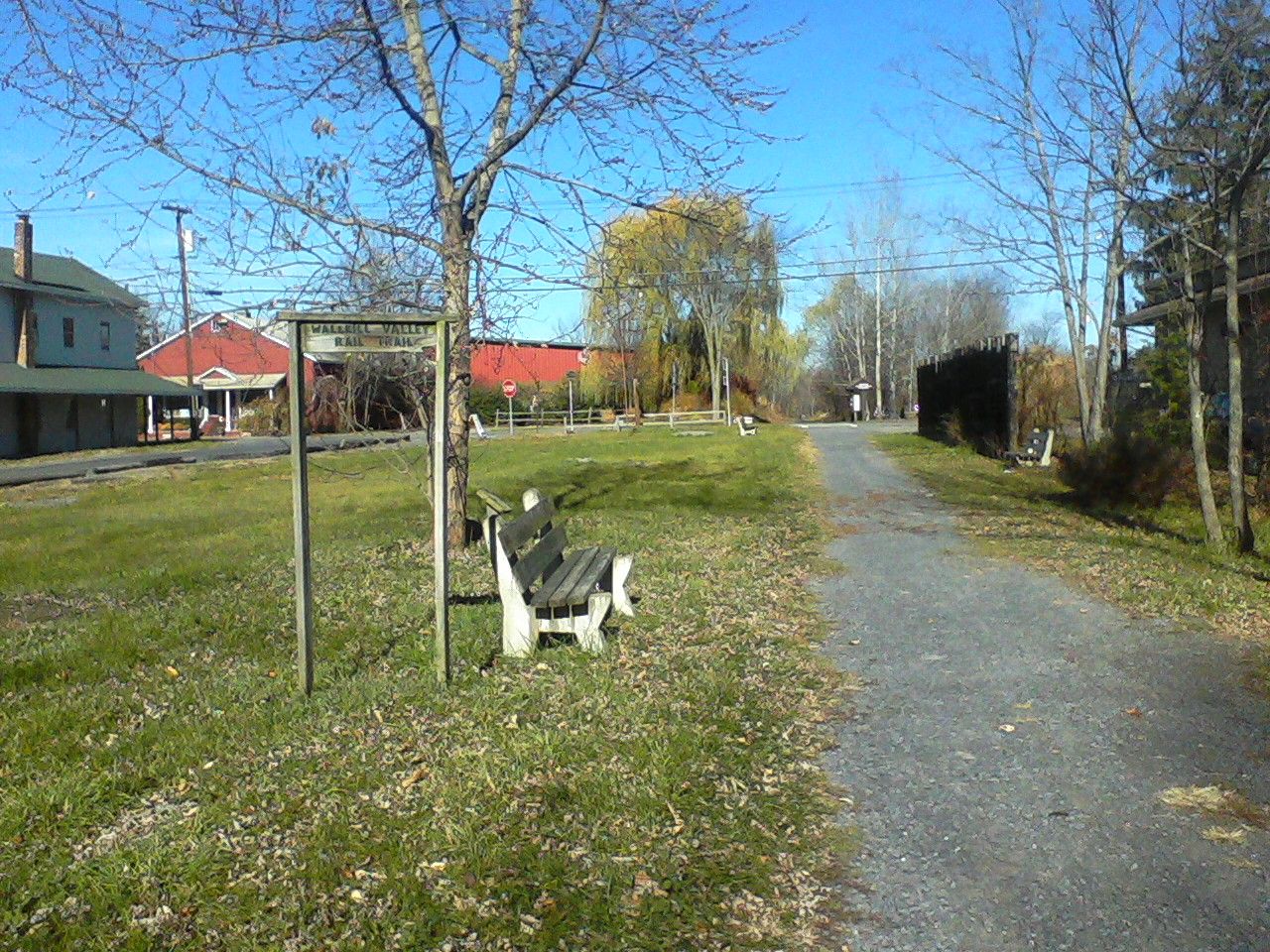
| Wallkill Valley Rail Trail trailheads on town land | 5–10 years |
| Benches, plaques, disc golf holes | Annual |
| Major new facility largely funded by a sponsor | 15+ years |
- Features, not the park. George Majestic Memorial Park keeps its name; sponsors are recognized as “presented by” on individual features.
- Pricing based on the feature’s annual maintenance cost times the term, awarded by public offering and Town Board resolution, with a right of first refusal on renewal.
- Standards: modest, uniform signs that fit our rural character; no political candidates or committees, tobacco, cannabis, alcohol or adult businesses, or parties with pending town business.
- Transparency: a public register of every agreement and amount.
- River access: the boat launch on Old Ford Road is a natural candidate, but its ownership still needs to be confirmed against county parcel records before it can be offered.
Sources: HudsonValleyOne (pump track) · PDGA (disc golf) · Visit Ulster (Majestic Park)